However, I did come across a number of sales at the larger retail chain bookstores - Chapters, Indigo, Coles, Smithbooks etc. I picked up a number of non-fiction and science books that I found very interesting and relevant to my personal tastes both within and outside the realm of music education. Within the past couple of years, my fascination in elementary education has grown (literacy, teaching methods).
My current job nature has propelled me to delve into topics including developmental psychology, child psychology and elementary education. Upon further investigation of teaching to younger children, while psychology may deal with effects of external experiences, my curiosity has peaked specifically in neurological inefficiencies, behavioural neuroscience, biological disorders in children stemming from birth - all of which affect their education, individual coping skills, learning styles and abilities.
Most importantly, I am seeking to discover more on effective treatment and intervention (even stories of occupational therapy for severe cases). Through an activity as simple as a music lesson, the child is encouraged to use most of their human senses including sight (vision), touch and hearing (auditory) which is beneficial to their development. As soon as you discover a potential disorder or dysfunction in a developing child and the earlier you intervene during a child's earliest developmental stages from birth to 5 or 6 years old, the greater the chance that they will grow to improve. It'll take time, but it's better to be able to do something about it!
Often, unfortunately, these deficiencies go undetected, but there's a greater chance that they won't escape the watchful eyes of professionals including teachers and doctors who work directly with children daily. I'll offer more of my personal findings and insight (and how they relate to my job role) another time.
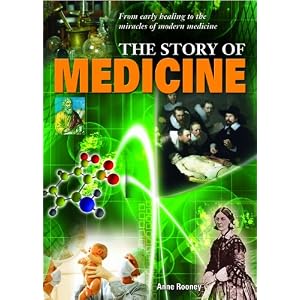
As I continued to browse the shelves, one of the basic books I had found that outlines the study of medicine in the most general sense throughout history and its scientific developments pertaining to human / cultural societies was "The Story of Medicine" (2009) with facts, articles and figures compiled by Anne Rooney. It's a great handy book you can keep just about anywhere (desk, coffee table, car) as you're itching for a quick, brief answer to a medical inquiry. It guides you with colourful illustrations, chapters written in chronological (historical) order, memorable quotes, biographies and definitions of basic medical terms.

Hippocrates of the Age of the Pericles, Ancient Greece (c. 460-375 BC)

Thoth - Egyptian god of science, writing, religion, philosophy, magic
Florence Nightengale (1820-1910) - English nurse, writer, statistician
Topics (divided into well-organized chapters) include: primitive surgery, historical models of the body and disease, diagnosis, plagues and pandemics throughout history, germ theory and contagion and more. This book is part of series that also includes "The Story of Mathematics" and "The Story of Physics" compiled by the same author. The book's simple explanations and organized info structure made it extremely easy (even for me!) to follow along.


Ignaz Semmelweis (c. 1864) - handwashing theory to prevent spread of germs

Taking the pulse is central to diagnosis in Chinese medicine
For someone (like me) who has never really taken an interest in science, biology or chemistry growing up (I never really could get past the dissection stages), this is definitely one "door" that I am now looking forward to opening!!
"Medicine is not only a science; it is also an art. It does not consist of compounding pills and plasters; it deals with the very processes of life, which must be understood before they may be guided" - Paracelsus (1493-1541).

No comments:
Post a Comment